
History
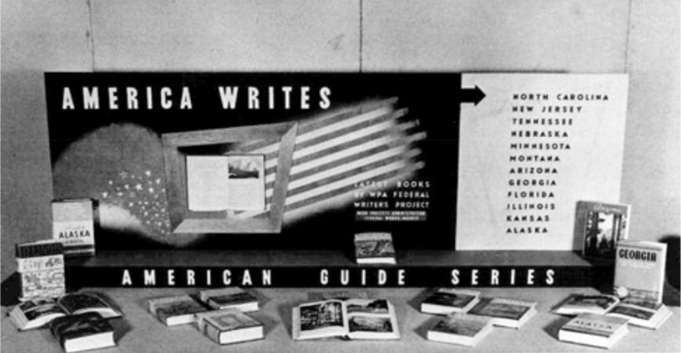
The Depression-era Federal Writers’ Project created cheap, informative, often funny, still delightful book-length “WPA Guides” to all 48 states, as well as 40 cities, 18 regions and territories, countless counties, rivers, national parks, and other, less mappable American phenomena. After dozens of local newspapers folded, the FWP reported lifesaving news of fire and flood. And it recorded then-unprecedented “oral histories” of 10,000 Americans.
This relatively tiny program also heralded a new era in American literature, which had produced one Nobel Prize winner in the previous 40 years and proceeded to win 10 in the next 80. The Federal Writers’ Project enabled Richard Wright, with barely a high school education, to quit mucking out hospital rooms for a living and find his calling as a writer.
The Project also helped start or restart a star-studded list of literary careers like Wright's, including those of Zora Neale Hurston, John Cheever, Saul Bellow, and Ralph Ellison. The last three became good friends—among innumerable, otherwise hard-to-imagine interracial (and cross-partisan) friendships begun on the project.
Finally, the FWP helped foster the greater sense of shared national purpose that eventually helped win a world war.